

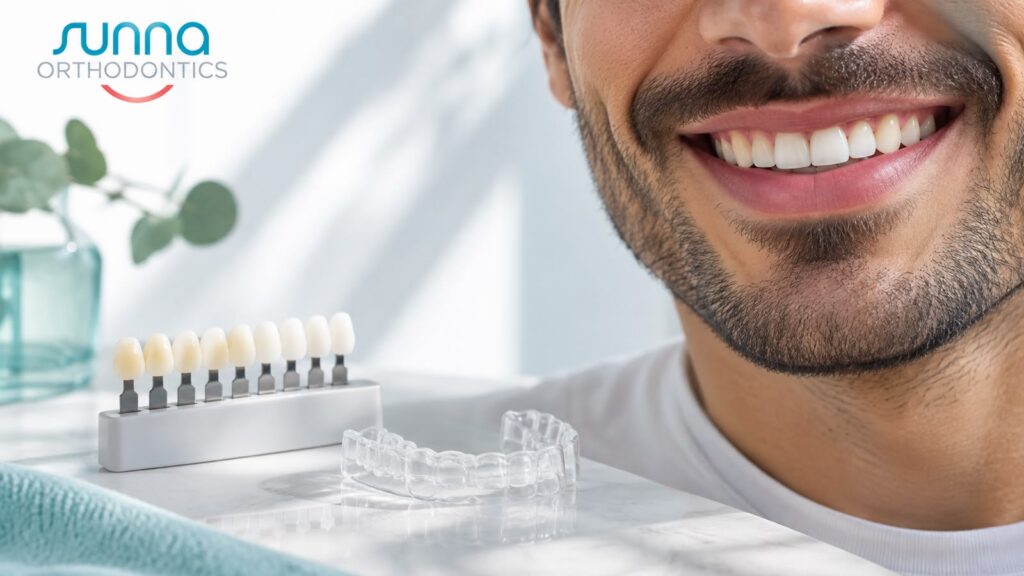
✨ Teeth Whitening at Sunna Orthodontics: What the Science Says and What to Expect
A brighter smile is one of the most requested cosmetic dental treatments, and one of the most misunderstood. Between social media trends, over-the-counter kits, and conflicting advice, it is difficult to know what is safe and what actually works.
At Sunna Orthodontics, we offer professional whitening in two formats, in-clinic and take-home, both supervised by a dental professional. Here is what you should know before you begin.
🔬 How Does Teeth Whitening Work?
Professional whitening uses peroxide-based agents, typically hydrogen peroxide or carbamide peroxide. These compounds penetrate the enamel and break down the pigmented molecules responsible for discoloration, a process known as oxidation.
Whitening does not remove a layer of the tooth or change its structure. It lightens the color within the tooth by breaking apart the stain molecules. This is why professionally supervised whitening, using controlled concentrations, is considered safe when performed correctly.
🎨 Why Do Teeth Become Discolored?
Tooth discoloration generally falls into two categories.
Extrinsic stains form on the surface of the enamel. Common causes include coffee, tea, red wine, dark sauces, and smoking. These respond very well to whitening.
Intrinsic stains develop within the tooth structure. Causes include aging, certain medications, trauma, and excess fluoride during tooth development. These can still be improved, but results vary and depend on the cause.
An examination before treatment helps determine which type you have and what outcome is realistic.
🏥 Our Two Whitening Options
In-Office Whitening
Performed in a single supervised visit, this option uses a professional-strength whitening agent applied by your dental professional. Gums and soft tissues are protected throughout the procedure. It delivers visible results in one session and suits patients who want a faster outcome.
Take-Home Whitening
Custom-fitted trays are made to match your teeth, and you receive a professional whitening gel to use at home according to your doctor’s instructions. Because the trays are custom-made, the gel stays evenly distributed and in contact with the teeth rather than the gums. Results develop gradually over several days, and the lower concentration generally makes this option gentler for patients prone to sensitivity.
The right choice depends on your goals, your timeline, and the sensitivity of your teeth. Your doctor will guide you.
✅ Who Is a Good Candidate?
Whitening is suitable for most adults with healthy teeth and gums. Before treatment, a dental assessment is essential, because:
- Cavities and gum disease should be treated first.
- Crowns, veneers, and fillings do not change color with whitening, which can affect the final match.
- Patients with significant enamel wear or high sensitivity may need a modified approach.
Whitening is not recommended during pregnancy or breastfeeding, and it is generally advised for people over 16 years old.
🦷 A Note for Orthodontic Patients
Whitening during active treatment with fixed braces or aligners is not recommended. The area beneath each bracket or attachment is protected from the gel, which can leave a patch of unchanged color once the braces are removed. For this reason, we generally recommend completing orthodontic treatment first, then whitening.
⚠️ What About Sensitivity?
Temporary sensitivity to hot and cold is the most common side effect of whitening. It occurs because the peroxide temporarily increases the permeability of the enamel, allowing stimuli to reach the nerve more easily. It typically resolves within 24 to 48 hours.
Using sensitivity toothpaste, avoiding extreme temperatures, and following your doctor’s instructions on gel concentration and wear time all help manage it.
🥛 Protecting Your Results
Teeth are more porous immediately after whitening, which makes them more prone to staining in the first 48 hours. During this window, we recommend:
- A white or light-colored diet, and avoiding coffee, tea, red wine, dark sauces, and colored drinks.
- Avoiding smoking.
- Brushing gently.
Over the long term, good oral hygiene, regular dental cleanings, and limiting staining foods and drinks will help maintain the result. Many patients choose periodic touch-ups, and your doctor will advise on timing.
🚫 What We Do Not Recommend
Social media is full of at-home whitening hacks, including charcoal powders, baking soda, lemon juice, and unsupervised products ordered online. Many of these are abrasive or acidic and can erode enamel, causing irreversible damage and heightened sensitivity.
Professional whitening is effective precisely because it is controlled, measured, and supervised.
✅ The Bottom Line
Professional whitening is a safe, effective way to improve the color of your smile when it is properly assessed and supervised. The best results come from choosing the right method for your teeth and following aftercare carefully.
Interested in brightening your smile? Book a consultation at Sunna Orthodontics. We will assess your teeth, recommend the right whitening option, and guide you through every step of the process.