

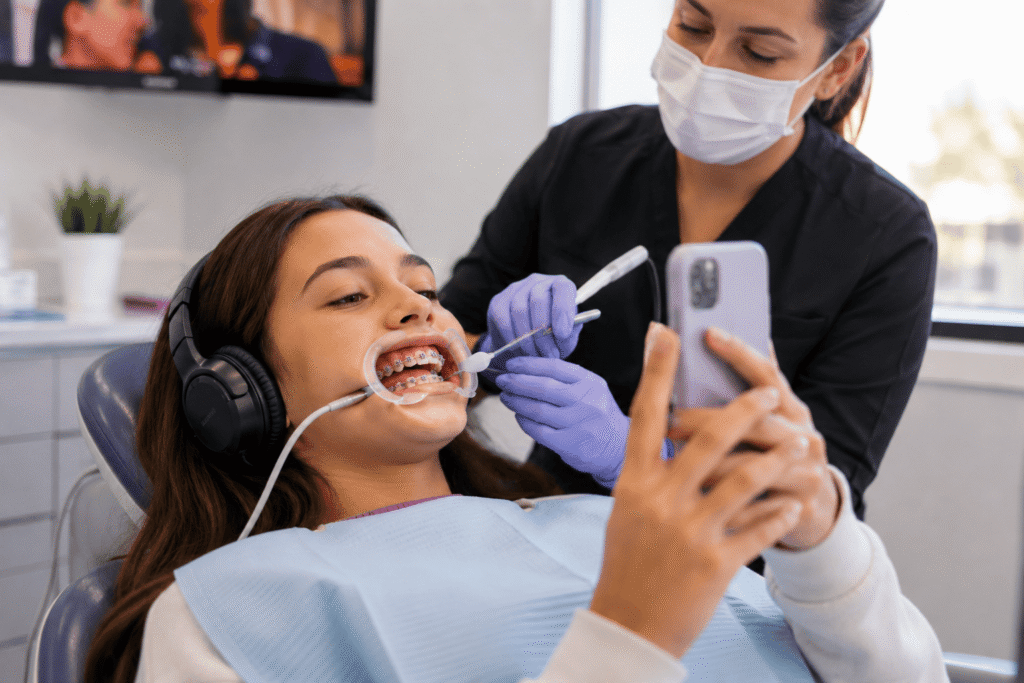
One of the most common questions we receive at Sunna Orthodontics is whether getting braces is painful. It’s a completely valid concern, and one that deserves an honest, informed answer.
The short answer is: the procedure itself is painless, but some discomfort in the days that follow is normal, expected, and temporary.
Why Do Braces Cause Discomfort?
To understand the discomfort, it helps to understand what braces are actually doing.
Orthodontic braces work by applying continuous, controlled pressure to the teeth. This pressure stimulates a biological process called bone remodeling — This is a natural physiological response. The mild soreness you feel is your body’s reaction to that pressure — similar in nature to the muscle soreness felt after physical exercise. It is a sign that treatment is actively working.
What Happens During the Placement Appointment
The appointment itself — typically lasting between 60 and 90 minutes — is entirely comfortable. No injections and no drilling are involved.
Your orthodontist will bond the brackets to the surface of each tooth using a dental adhesive, then thread an archwire through them. Patients frequently report that the process feels unfamiliar but causes no pain.
Immediately after placement, the teeth may feel slightly heavy or pressure-sensitive as the mouth adapts to the new appliance. This is normal and passes quickly.
The First Three to Five Days
This is the period that requires the most patience.
As the archwire begins exerting pressure, most patients experience a dull, generalized ache in the teeth and jaw. The gums and soft tissues of the lips and cheeks may also feel irritated as they adjust to contact with the brackets.
This discomfort typically peaks around 24 to 72 hours after placement and resolves within four to five days for the majority of patients. It is rarely described as sharp pain — most patients compare it to the feeling of pressure or tenderness.
Managing Discomfort Effectively
The following are clinically recommended approaches to managing soreness after placement or adjustment:
Soft diet — Opt for foods that require minimal chewing during the first few days: yogurt, soup, eggs, cooked vegetables, and similar options. Avoid hard, crunchy, or chewy foods until sensitivity subsides.
Pain relief — Over-the-counter analgesics such as ibuprofen or paracetamol are effective for managing orthodontic discomfort when taken as directed. Consult your pharmacist regarding appropriate dosing, particularly for younger patients.
Orthodontic wax — If brackets cause friction against the soft tissue of the lips or cheeks, orthodontic wax provides an immediate and simple barrier. Your orthodontist will provide this at your first appointment.
Cold relief — Cool water or cold foods such as yogurt can help reduce localized inflammation and soothe gum sensitivity.
Adjustment Appointments
Throughout treatment, patients attend regular appointments — typically every six to eight weeks — during which the orthodontist modifies the archwire or applies new forces to guide tooth movement.
A mild recurrence of soreness lasting one to two days is common following each adjustment. Patients generally find this easier to manage over time, as they become familiar with the pattern and know what to expect.
A Note for Parents
It is natural to feel concerned when your child experiences discomfort. However, it is important to understand that this is temporary, normal and necessary part of the treatment process — not a sign that something has gone wrong.
Preparation is one of the most effective tools available. When children understand in advance what to expect and why it happens, they manage the experience significantly better. At Sunna Orthodontics, we take time before every procedure to walk both patients and parents through each step — so no one walks out without knowing exactly what lies ahead.
The Bottom Line
Orthodontic discomfort is real, but it is predictable, manageable, and short-lived. The biological process driving that discomfort is the same process that will, over time, give your child a healthier bite and a confident smile.